

The collection becomes a record at the client's door
On their own phone, the driver records the pieces, the declared weight and the signature of whoever handed over the linen. At delivery, the same. When the truck comes back, the manifest is already in the system, linked to the contract and the weighing.
- Device
- The driver's phone
- Steps
- Collection at the client and delivery of clean linen
- Signature
- On screen, by whoever hands over or receives the linen
- No signal
- The record stays on the device and syncs when the connection returns
- Continues in
- Weighing in the dirty and clean areas
Who it is for
The app covers the part of the operation that depended most on paper: the client's door.
-
The driver
Opens the stop, records the pieces and collects the signature. No form to leave at reception, no notebook to copy out later.
-
The operations manager
Sees what has already been collected and delivered today, by driver and by client, without waiting for the truck to come back.
-
The client
Signs on the driver's screen, and the collection receipt is available in the customer portal.
What the app does
- 01
Pieces and declared weight recorded at the stop
The driver opens the stop and records the pieces and the weight the client declared. The manifest starts there, with number, date, time and client, and nobody has to retype it at the laundry.
Collection at the client demo data 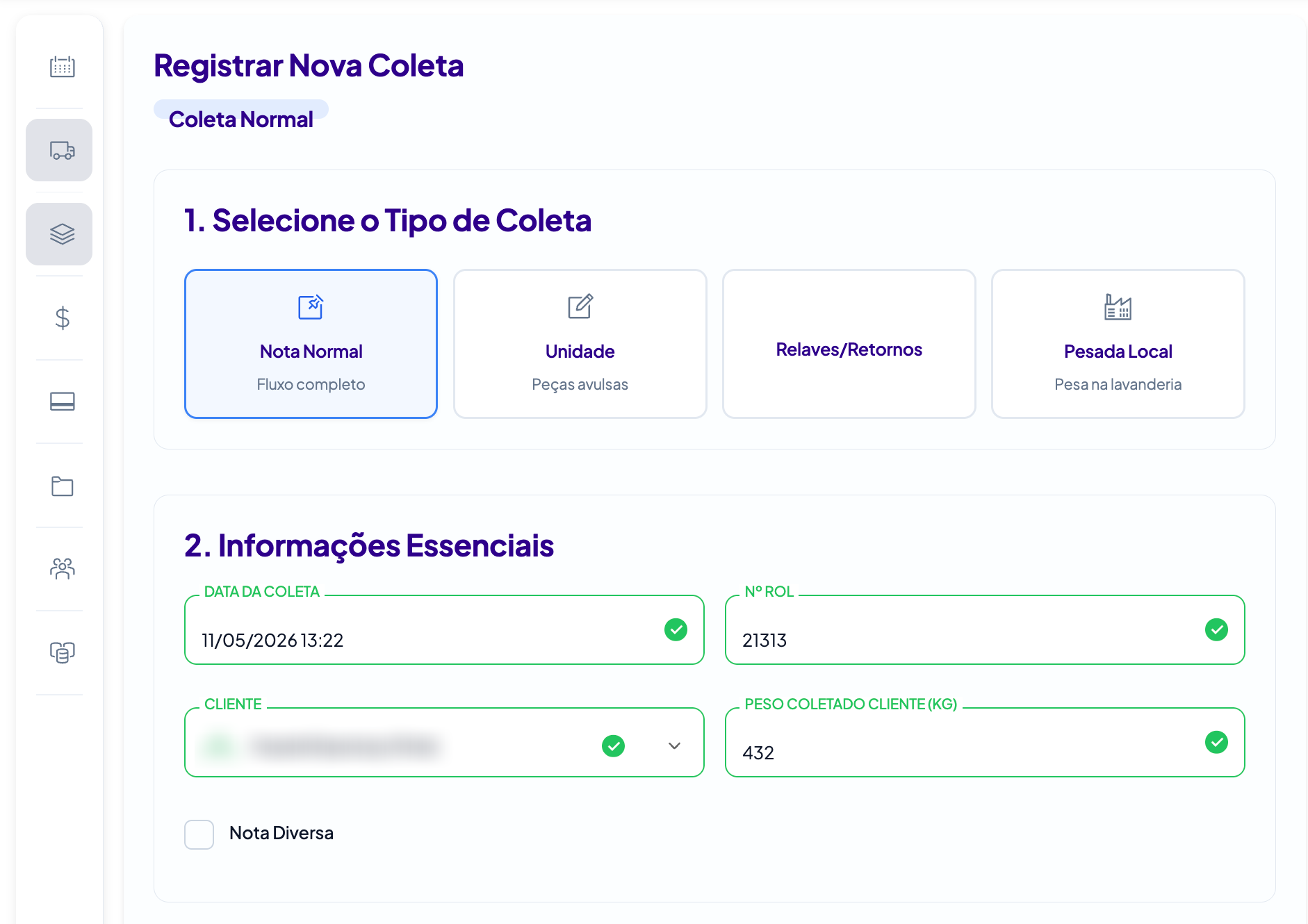
- 02
Whoever hands over the linen signs on the driver's phone
The signature is tied to that collection's manifest. If the weight is questioned later, the proof is in the record, with name, date and time.
- 03
Clean linen comes back under the same control
At delivery, the driver confirms what was delivered, in full or in part, and the client signs for receipt. The delivery stays linked to the original collection.
Delivery demo data 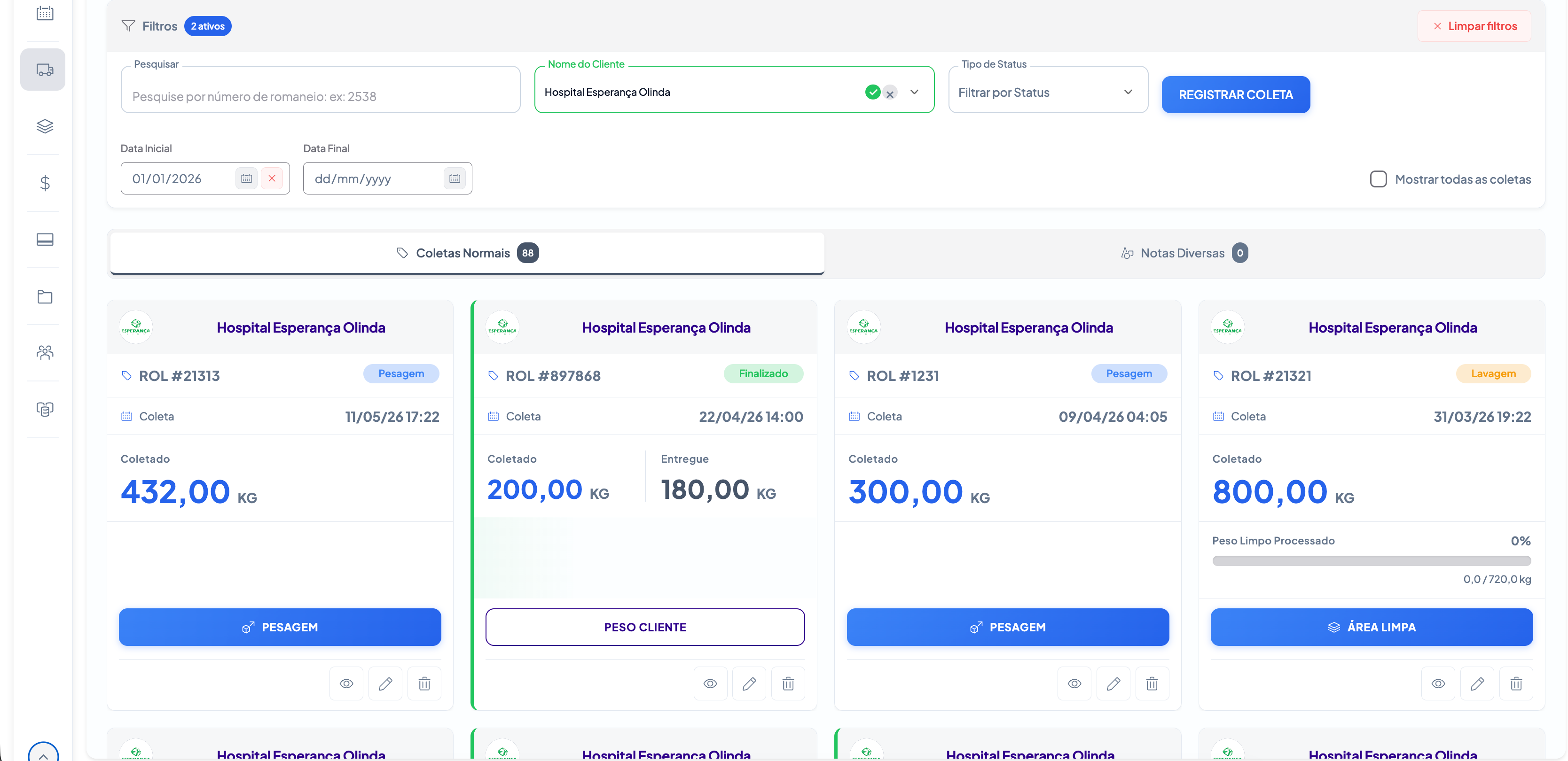
- 04
Garage, basement or open road: the record is not lost
Without a connection, the collection is kept on the device. When the signal returns, it syncs to the system without the driver redoing anything.
- 05
A planned route if you have one, a one-off stop if you don't
Operations with a fixed route follow the day's stops. Smaller laundries record collection and delivery as they happen, without building a route first.
How it works in practice
The truck's route does not change. What changes is where the data is born: at the stop, not at the laundry reception hours later.
Before
- 01Driver writes the pieces in a notebook or on a paper form
- 02Client signs the form, and the copy stays in the truck
- 03At the laundry, someone retypes the form into the system or a spreadsheet
- 04A lost or illegible form becomes a collection with no record
- 05The hospital disputes it, and the proof is a piece of paper nobody can find
With Cleanifly
- 01Driver records the collection on the phone, at the stop
- 02Client signs on screen, and the manifest comes out already signed
- 03The record arrives before the truck, ready for weighing
- 04With no signal, it stays on the device and syncs later
- 05The hospital disputes it? Manifest, signature and weight are on the same collection
What the manager sees
What the driver records shows up on the laundry's dashboard the same day, without anyone typing it in.
- Collections and deliveries recorded, by driver and by client
- Declared weight of each collection, ready to compare with the scale
- Route stops done and pending
- History per client, exportable to PDF and XLSX
See the app on a real collection
Half an hour with one of your contracts: the collection on the phone, the weighing and the invoice coming out of the record.