
The data enters on the tablet and never leaves the system.
Digital delivery slip with on-the-spot signature, declared weight next to your scale's weight, soiling by contract and a divergence alert before it turns into a dispute. The first half of the cycle — collection and weighing — in a single screen.
- Step
- Collection at the hospital, weighing in the dirty and clean areas
- Weighing
- Manual with any scale, or automatic depending on the model of yours
- Scale
- The one already on the floor, any brand
- Tablet
- An ordinary one, on the wall or in the truck, nothing from a store
- Continues in
- Washing, delivery and invoice
Who it is for.
Collection and weighing is the step where the most data is lost to paper, and the first step that pays off when it becomes a system. Three roles meet here.
-
The driver in the truck
Tablet in place of the notebook. Delivery slip with items, observations and signature on the spot. Opens on the phone, nothing to install from a store.
-
The operations manager
Sees in real time what was collected, by whom, at which hospital. Spots late collections before the hospital calls.
-
The hospital client
Receives an electronic receipt on the spot. Checks collection history through the portal. Knows what was weighed without calling.
What the module does.
- 01
The truck tablet replaces the notebook and the paper form.
The driver arrives at the hospital, opens the tablet, records collected items, the receiving person signs on the screen. Prints on the spot on the printer you already have. The hospital keeps the paper, the laundry keeps the data.
Digital delivery slip demo data 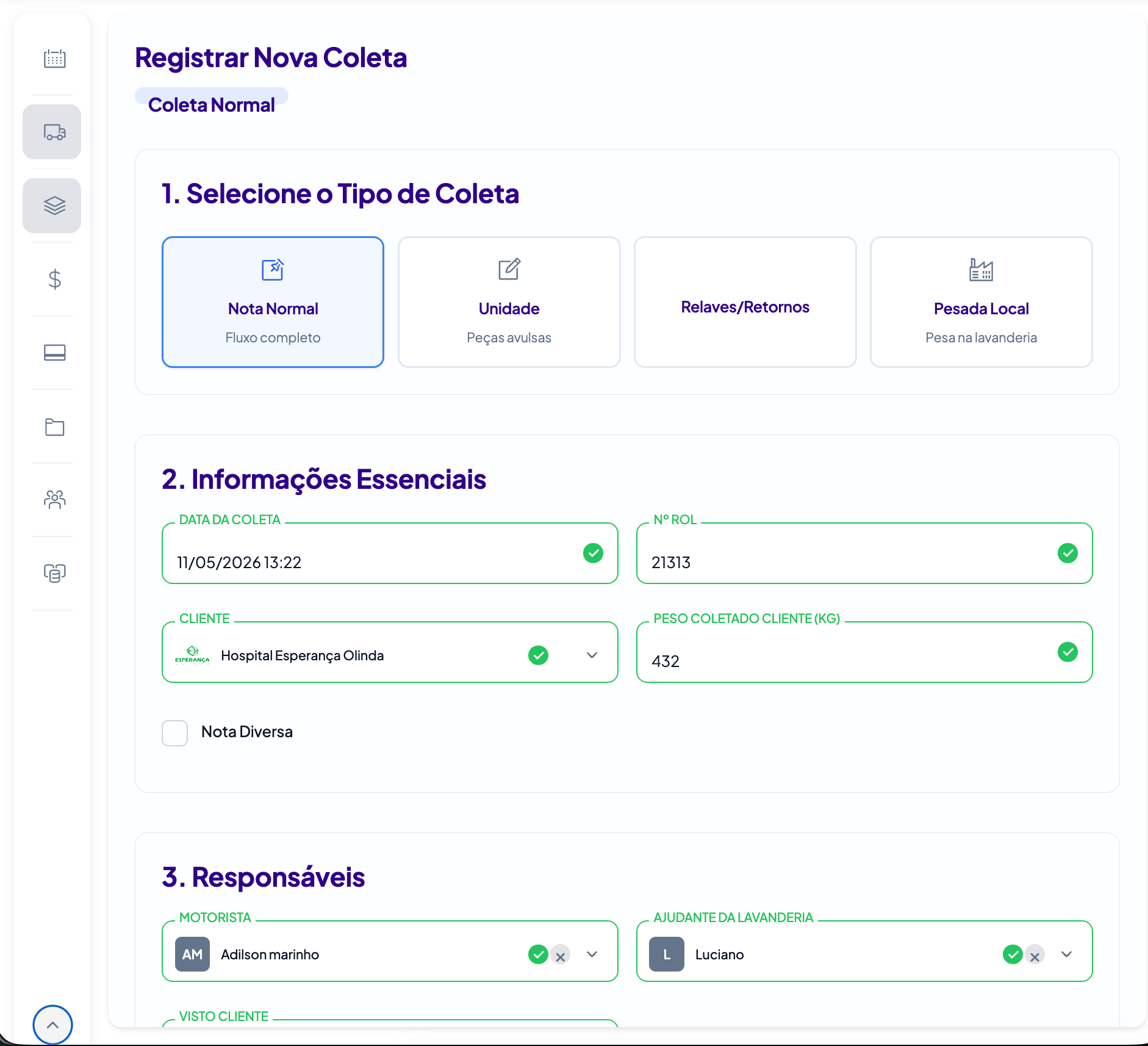
- 02
Linen enters the laundry and the weight is already a record.
Two routes, and you pick one in the demo. Manual: the operator reads the display and types the weight on the wall tablet, with the tare coming off automatically, which works with any scale from day one. Automatic: the scale sends the weight to the system itself, and that depends on the make and model of yours, which we assess together in the demo. The number is saved with date, time, contract and manifest, next to what the hospital declared. No notebook between the scale and the system. Any scale brand.
Dirty area weighing demo data 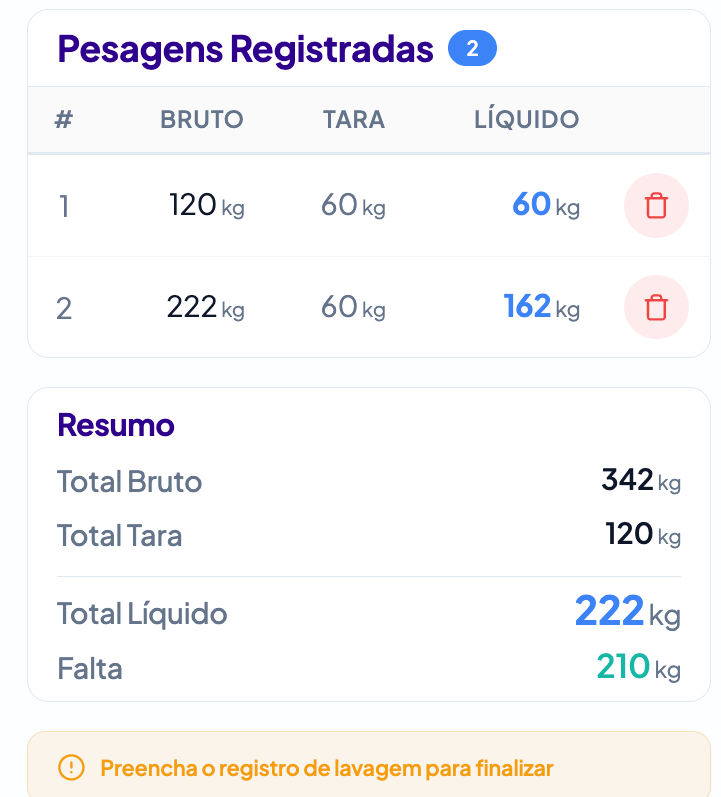
- 03
Each hospital has its own negotiated soiling index.
The contract defines the expected soiling per client. The system calculates real soiling at every collection (dirty weight × clean weight) and compares it to the contract. Large deviations are flagged, not surprises at the end of the month.
- 04
Linen leaves the wash and the weight closes the cycle.
Same scale, same sequence. Clean weight recorded, linked to the original collection. The difference becomes real soiling. The system compares it with the contract index and, when the declared weight and the scale disagree, the alert lands in your inbox — nothing slips through.
Clean area weighing demo data 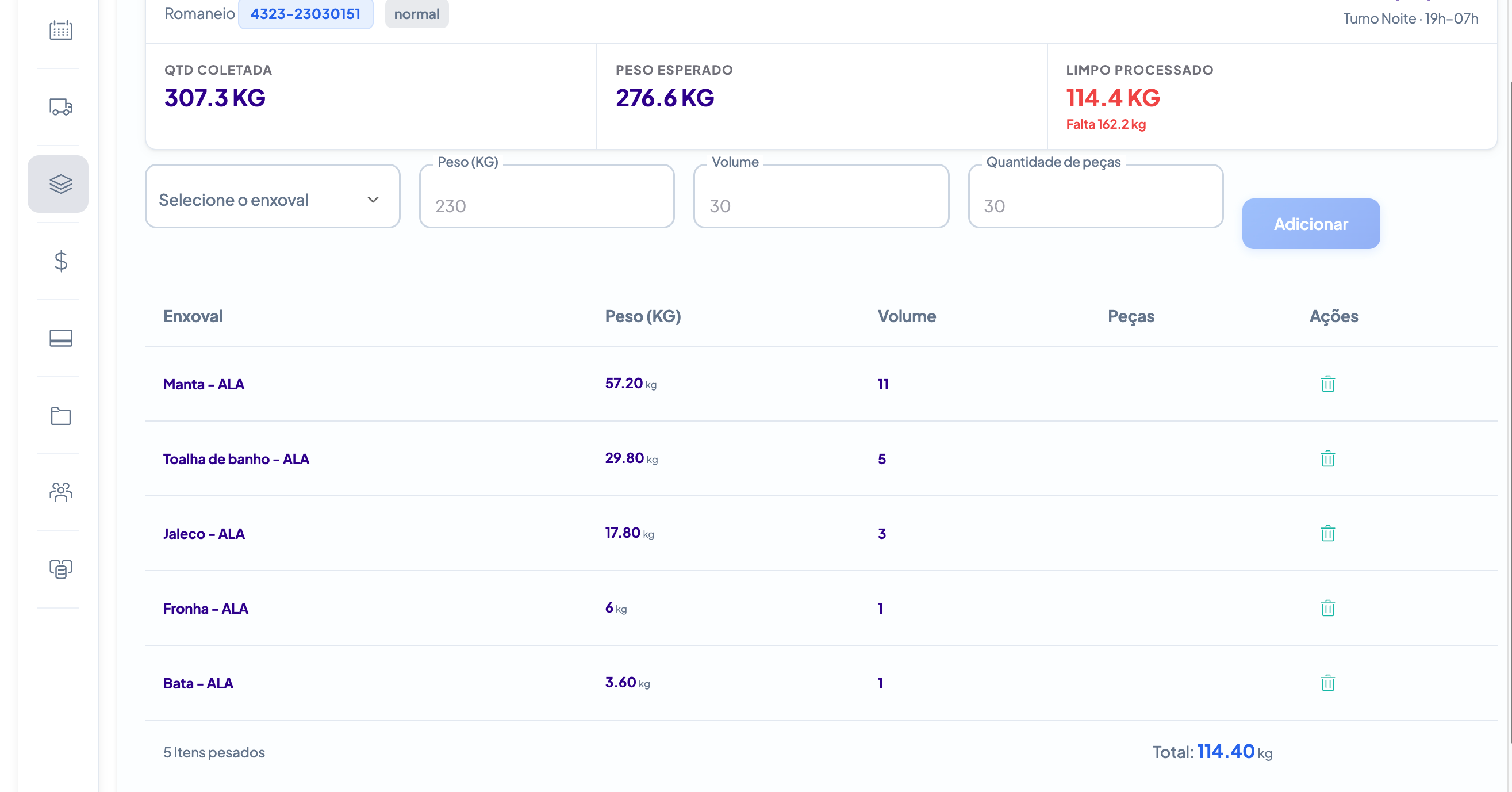
- 05
A collection from six months ago, in three clicks.
Who collected. At which hospital. Which items. Who weighed. How much went in and how much came out. Who signed for receipt. All searchable, exportable in PDF and XLSX. Audits stop being archaeology.
How it works in practice.
The operation does not change. It is still collection, dirty weighing, washing, clean weighing, delivery. What changes is where the data lives.
Before
- 01Driver writes items in the truck notebook.
- 02Notebook stays at the laundry reception.
- 03Weighing operator writes the scale reading in another notebook.
- 04At month end, someone transcribes both notebooks into a spreadsheet.
- 05Transcription error turns into a hospital dispute. Cave in or argue.
With Cleanifly
- 01Driver records on the tablet, hospital signs, slip printed on the spot.
- 02Weighing on the scale, weight typed on the tablet, linked to the contract.
- 03Soiling calculated on the spot; a divergence becomes an alert.
- 04At month end, the invoice comes from weighing data. No transcription.
- 05Hospital questions a weight? The answer is three clicks away.
What the module produces.
Collection and weighing feed the rest of the system: invoice at month end, manager dashboard, client portal. They also produce their own reports.
- Volume collected per day, week, month, per client
- Average soiling per client, a basis for contract renegotiation
- Collections pending weighing, with the bottleneck visible in real time
- Weight divergence: when, which hospital, which manifest
- Performance by shift, morning 7am-7pm or night 7pm-7am
See it in a real operation.
Half an hour with your numbers, and you decide afterwards whether it fits.