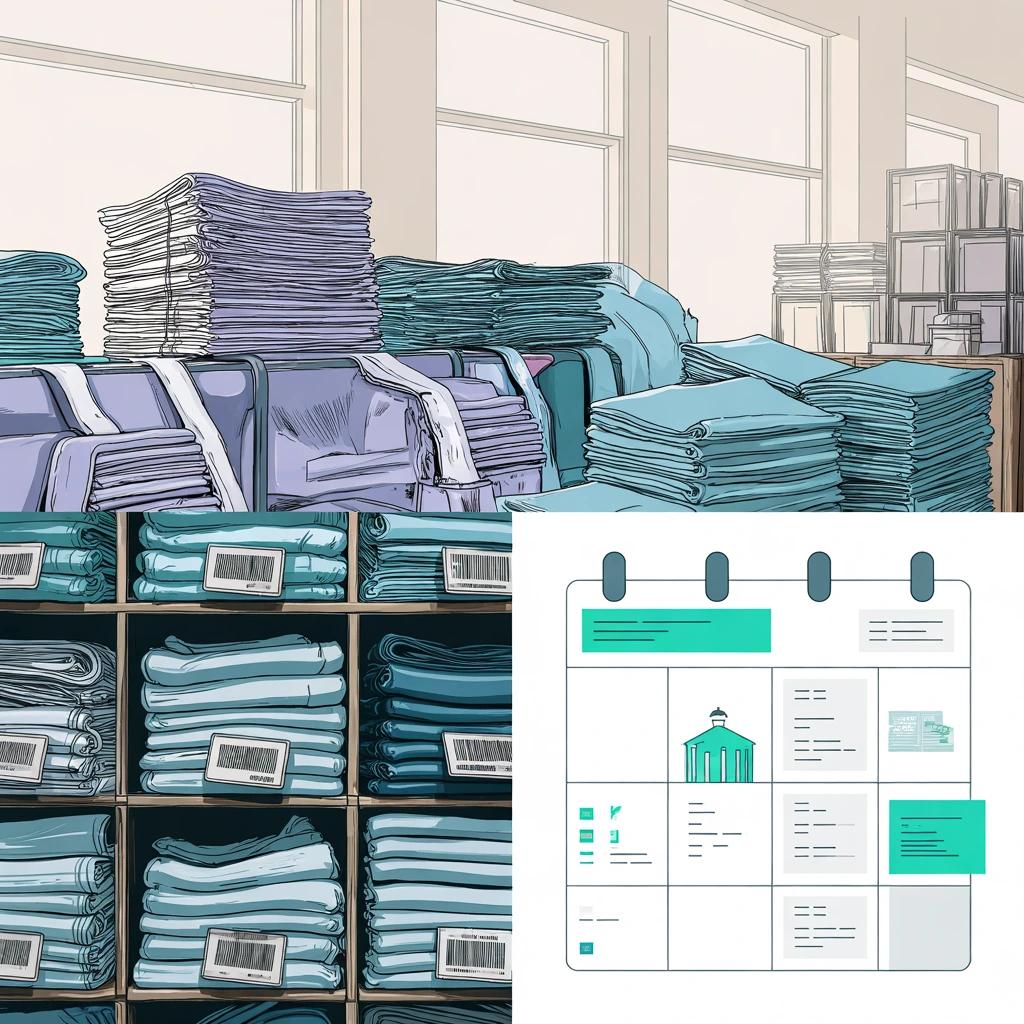

Digital transformation has become inevitable for companies seeking to remain competitive in today’s market. For hospital laundries, this process is even more crucial. After all, handling significant volumes of linen, controlling quality, managing multiple clients, and ensuring traceability is a complex challenge when done manually.
But here’s the good news: you don’t need to revolutionize your entire operation overnight. Digital transformation in hospital laundries can begin with simple, practical, and well-structured steps. In this guide, we’ll explore how to start this journey without letting the fear of the unknown block your progress.
Identifying Your Laundry’s Main Pain Points
Before implementing any solution, it’s essential to diagnose where your biggest operational challenges lie. Ask yourself:
- Manual volume control: Are you still writing down quantities of dirty and clean linen on paper? Does this cause delays and recurring errors?
- Inaccurate billing: Do your clients complain about inconsistencies in their bills? Do you spend hours reconciling values manually?
- Lack of traceability: Do you know exactly where each batch of linen is in real time?
- Frequent reprocessing: How many items are returned due to quality problems or incorrect identification?
- Operational visibility: Do your managers have quick access to data for decision-making?
These problems cost time, money, and affect the satisfaction of your hospital clients. The good news is that accessible technology can solve all of them.
Choosing the Right Solution for Your Reality
There is no “one-size-fits-all” solution for digital transformation in laundries. The market offers different approaches, and your choice should consider the size of your operation, budget, and objectives.
When evaluating a digital platform, look for essential features such as:
- Digital collection capture: Tablets or smartphones to record linen at the source, eliminating manual notes
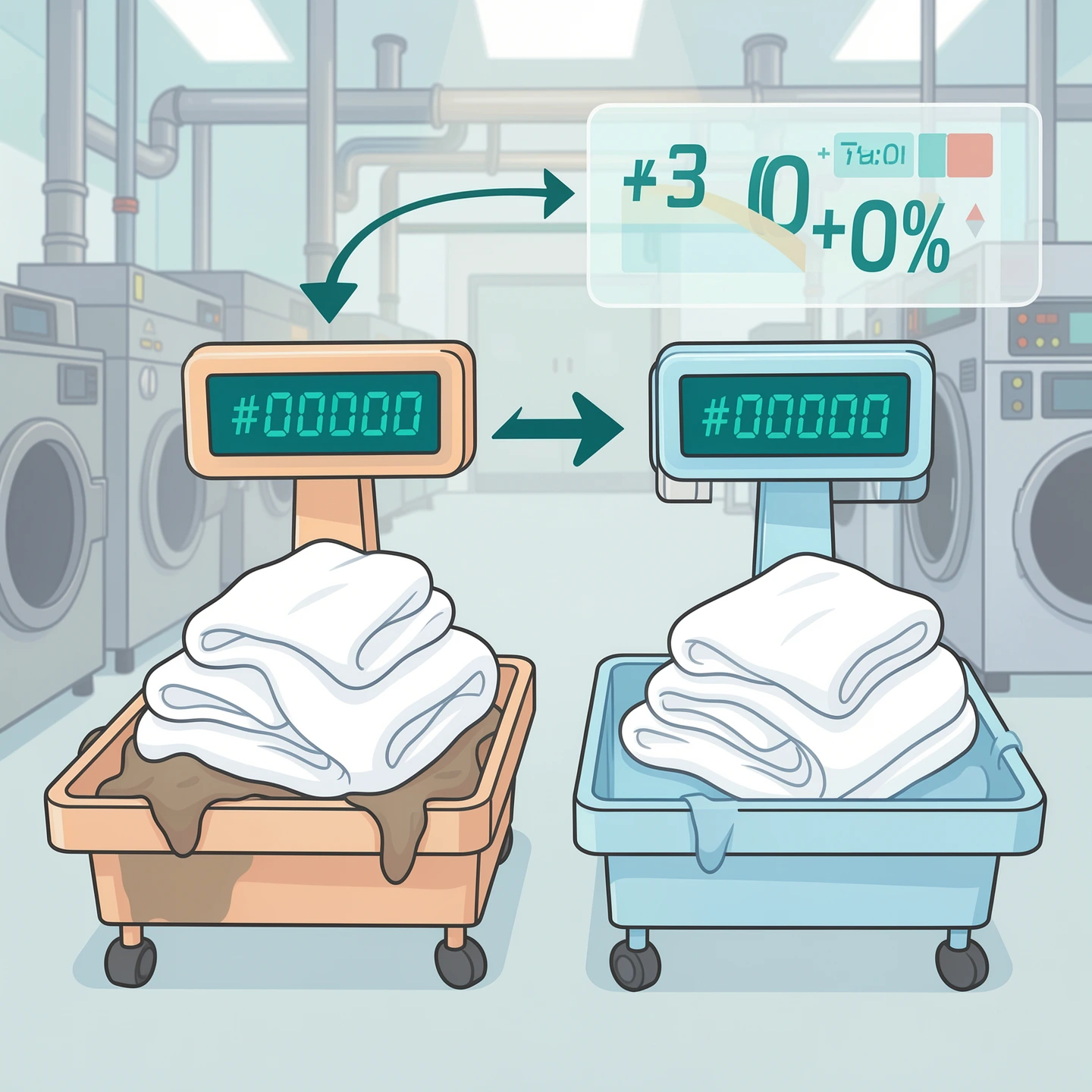
- Automated weighing: Integration with scales in dirty and clean areas for real-time volume control
- Client and contract management: Centralized database with information from all your hospital clients
- Return and reprocessing control: Automatic tracking of items that need to be redone
- Automated billing: Elimination of errors and faster payment collection
- Operational dashboard: Real-time visibility of what’s happening in the laundry
- Historical data import: Ability to migrate old records to maintain continuity
A robust solution should be intuitive, quick to implement, and scalable as your company grows. Ideally, new instances should be up and running in hours, not weeks.
Starting Small: The Gradual Adoption Strategy
The most common reason for digital project failure is trying to do everything at once. Your teams aren’t prepared, processes aren’t optimized, and return on investment is compromised.
The solution? Gradual and intelligent adoption.
Start by digitizing the process that hurts most in your operation. If it’s dirty linen collection, implement digital capture via tablet first. If it’s billing, start there. Let your team get familiar, build confidence, and then expand.
This approach offers several benefits:
- Less resistance to change: Your team faces one transformation at a time
- Value demonstration: Tangible results appear quickly
- Applicable learnings: You understand how technology works in your specific context
- More controlled budget: No need to invest everything at once
- Greater chance of success: Smaller projects have a proven higher success rate
Many laundries that implemented digitally started with simple collection capture and, six months later, had their entire workflow digitized.
Preparing and Training Your Team
Technology without prepared people is just an expense. That’s why investing in proper training is absolutely critical.
Start by mapping who will use the solution:
- Collection operators: Need to learn how to use tablets to record linen
- Weighers: Must understand how to record volumes on scales
- Managers: Need to know how to interpret data and make information-based decisions
- Finance: Will learn to validate and process automatically generated invoices
For each group, create a specific training plan. Not everyone needs to understand everything, but each person must master their part.
Practical tips:
- Select “change champions” on your team to lead adoption
- Start with short, repeated training sessions, not one mega-training event
- Use examples from employees’ daily routines
- Create visual documents and quick reference guides
- Keep support available during the first months
A well-prepared team not only adopts the technology but improves it with valuable suggestions for your specific operation.
Measuring Results and Scaling with Confidence
Implementing technology without measuring its impact means losing the opportunity to justify future investments and motivate your team.
Define clear indicators before you even begin:
- Processing time: How long does it take to register a batch of linen?
- Billing errors: How many discrepancies appear between what’s recorded and what’s billed?
- Cycle time: What’s the interval between collection and delivery?
- Reprocessing rate: What percentage of items needs to be redone?
- Client satisfaction: Do your clients report better traceability and accuracy?
After a few weeks with the solution active, compare the numbers. In most cases, laundries experience:
- 30-40% reduction in manual processing time
- Elimination of 90%+ billing errors
- Significant increase in operational visibility
- Decrease in returns due to identification problems
These results become your allies. With concrete numbers, expanding to other areas of the operation becomes simple.
The Time to Start Is Now
Digital transformation in hospital laundries is no longer a strategic option — it’s a necessity to compete. But as you’ve seen, it doesn’t have to be daunting.
Start today:
- Evaluate your pain points with your team
- Research solutions that offer quick implementation and dedicated support
- Choose a first step that’s small but impactful
- Prepare your team with proper training
- Measure results and use data to grow
Remember: the best time to start was yesterday. The second best is today.
Your laundry deserves to operate efficiently, your hospital clients deserve traceability and reliability, and your team deserves to work with tools that simplify, not complicate, their daily tasks.
The digital transformation journey of your laundry begins with a single step. What will yours be?